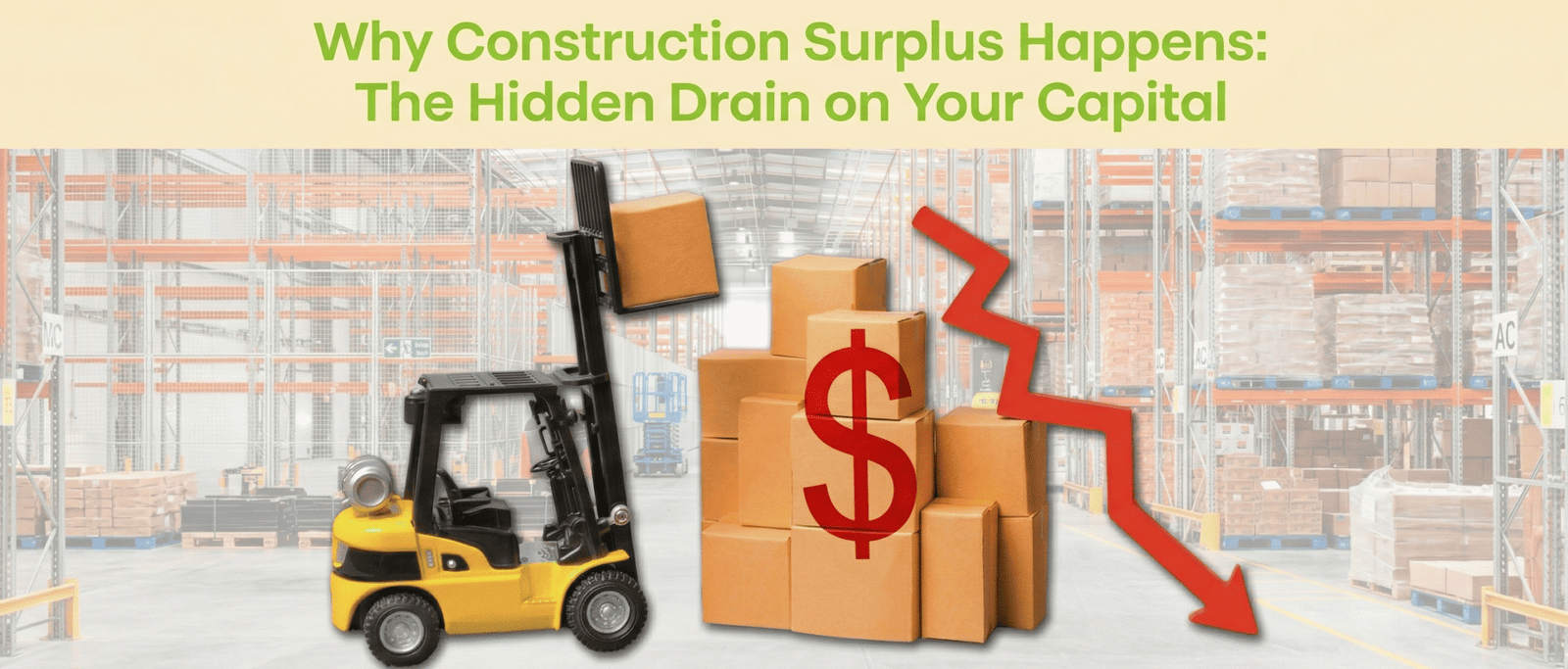
Why Construction Surplus Happens: The Hidden Drain on Your Capital
In India’s fast-paced construction industry, surplus material isn’t just "leftover" stuff—it is blocked capital. While every builder and contractor aims for efficiency, extra inventory often piles up at the site, slowly losing value and eating into profits.
But how exactly does this happen? Let’s break down the two primary reasons why surplus is generated and why it often stays stuck.
1. The "10% Buffer" Trap
It is a standard industry practice across India to order an extra 10% of material beyond the actual required quantity. This is traditionally done to account for breakages, cutting waste, or minor errors during installation.
In many cases, this extra 10% is written off as "wastage" from day one. However, if the material is handled carefully and applied properly, that entire 10% buffer remains untouched.
What was meant to be a safety net suddenly becomes surplus. Because the project is already finished, this brand-new material often sits in a corner, gathering dust instead of being put to use.
2. The Last-Minute Design Pivot
The second major cause of surplus is the nature of the creative process. Architecture and interior design are fluid; sometimes, a particular material that looked great on paper simply doesn't "suit" the actual space once it's on-site.
When a designer or architect decides to change a material at the last moment, the original material has often already been delivered.
- The Problem: The received material remains unused on-site.
- The Financial Hit: It blocks significant capital unless it is sold "randomly" to local vendors at a loss.
- The Dead End: Most companies won't take these materials back once they’ve been delivered to a site.
The Cost of Waiting
When inventory stays with the owner for a long time, it doesn't just take up space—it deteriorates.
- Quality Loss: Exposure to moisture, dust, and onsite handling can damage even the sturdiest materials.
- Price Depreciation: As the quality drops and styles change, the resale value of that material plummets.
Turning "Dead Stock" into Liquid Cash
At Bikrri, we believe that surplus shouldn't be a loss. Whether it's your 10% safety buffer or a change in design direction, that material is still valuable.
By listing your unused inventory on a structured platform, you can recover your blocked capital and ensure that high-quality materials don't go to waste.
"Maximize the value of your existing resources and keep your project economics strong."